WKN-S14 · Typical scenario · Manufacturing
Eighteen women and their families: recruiting a group of packers from Kyrgyzstan
A confectionery factory in the Poltava region asked for eighteen packers. We walk through our part of the work: why we recruited a women's group together with a female recruiter, why we talked not only to the candidates but to their families, why we turned down a dormitory floor before departure, how we checked the flats for registration, and what to do when the surname in a passport isn't the one a woman uses.
- 18 womenpackers from Kyrgyzstan, most abroad for the first time
- 12 familiesasked for a video meeting before agreeing to departure
- 2 flatsfor women only instead of a floor in a mixed dormitory
- 0 departuresafter arrival: the whole group came and stayed
Typical scenario. This story is built from situations common in our work with foreign workers. The company, people and figures are illustrative. It is not a report on completed work but a walk-through of how WORKIN runs such a project from request to handing people over to the shift.

Brief dossier
- Client
- Confectionery factory: biscuits, sweets, packing
- Region
- Poltava region
- Need
- 18 packers for the packing section
- Country
- Kyrgyzstan, visa-free entry
- What WORKIN did
- Recruitment with a female recruiter, family conversations, housing, addresses, documents, arrival and residence permits
- Focus
- Recruiting a women's group that families let go and that stays
01 / The request
Eighteen packers and a floor the factory thought was convenient
A confectionery factory near Poltava expanded its packing section and asked for eighteen women. Food production experience was welcome, but the factory was ready to train people itself. We recruited in Kyrgyzstan: citizens of that country enter without a visa, and in small towns many women are looking for stable work with housing.
The factory offered housing straight away: a separate floor in a dormitory a kilometre from the factory. In the very first conversation Azamat, our manager for workers from Kyrgyzstan, asked who else lived in the building. It turned out the other floors housed male workers from another company, with a shared entrance and kitchen.
To the factory this seemed a detail: the floor was separate and the rooms locked. For women going abroad for the first time, and especially for their families, it would have been the main reason to say no. We told the factory before searching for candidates, not after the first refusal. In parallel we asked for the factory's filing documents: a register extract, the staffing schedule with the packer position, and powers of attorney. While the factory looked for housing, we were already recruiting and lost no weeks.
- Who we're looking for
- 18 packers, food production experience welcome
- The candidates
- Women from small towns, most going abroad for the first time
- First housing offer
- A dormitory floor with an entrance and kitchen shared with men
- Our condition
- Women-only housing, agreed before recruitment starts
It's the family that lets a woman leave home. So we show the family the housing before the factory needs an answer.
02 / Housing
Two flats instead of a floor, and what we checked in them
The factory agreed to look for other housing and two weeks later offered two flats in a new building ten minutes from the gate. Before showing them to candidates, we checked the documents and the housing itself as we would any address for a residence permit and registration. Housing is regulated by the authorities; our job is to make sure everything is in order before people arrive.
Both flats had the same owner, with a two-year lease to the factory. We asked for the owner's consent to registration of residence for nine people in each flat to be written into the lease. The owner agreed at once, having rented to companies before. We took photos of the rooms, kitchen and entrance ourselves, so candidates and families could see the real rooms rather than pictures from a listing.
Transport after the evening shift and schedules are the factory's business, but we put into the information sheet what the factory confirmed in writing: how the women would get back to the flats after a shift. Families asked about this almost first. The factory hesitated at first over the higher rent for flats, but we showed that a single replacement in the first month costs more than the rent difference for a whole year. One flat was on the ground floor with windows onto the courtyard, and the group decided who would live with whom before departure, from a list Aigul drew up.
- 01
Who lives there
Only women from the group, nine per flat, no other residents.
- 02
Documents
A two-year lease and the owner's written consent to registration.
- 03
Address
The same for each woman's residence permit, registration and information sheet.
- 04
Photos
Taken by us in the flats themselves, so families saw the real housing.

03 / Recruitment
A woman leads the interview, and questions are asked back home
Azamat held the interviews together with Aigul, a recruiter at our licensed partner in Bishkek. The candidates spoke more openly with a woman: about children left with grandmothers, husbands with doubts, and what they feared about a foreign country. Azamat handled documents and conditions; Aigul led the conversation.
Each candidate received an information sheet in Kyrgyz and Russian: factory, job, pay, working hours, the flat's address, who lives there, how to get back after a shift, and which costs she covers herself. On the same sheet she confirms by signature that she wasn't charged for placement. We noted down the candidates' questions, because their families later asked the same ones. From forty-two CVs from our partner we held twenty-eight interviews. Eighteen candidates and five in reserve agreed, and several women decided after an honest talk about the conditions that the job wasn't for them; we thanked them for their frankness.
- who will I share a room with, and will there be men in the flat;
- how do I get home after the evening shift;
- will my passport stay with me;
- can I travel together with my sister or neighbour;
- who do I call if something happens at night.
04 / Families
A video meeting with the family before a woman says yes
After the interviews, twelve candidates asked for one thing: to talk to their families. For many that's not a formality but a condition of leaving. We held video meetings in the evenings, when husbands and parents were home. Aigul spoke in Kyrgyz, and Azamat answered questions about documents and the factory.
At each meeting the family saw photos of the flat and building, the address on a map, the information sheet and phone numbers for Azamat, Aigul and the group lead. They all asked the same things: who lives nearby, who will meet her, how she'll get back from work, can she call every day. We never answered 'we'll sort it out when you get there'. One mother asked to see the kitchen because her daughter had never cooked on a gas stove. Aigul smiled and promised the group lead would teach her. Small things like that removed more doubts than any documents.
Two families still wouldn't let the candidates go after the meeting, and we didn't press. Their places went to reserve candidates whose families had no doubts. Those who travelled did so with their families' blessing rather than against their wishes, and that's the best guarantee a woman won't head home in week three.
05 / Documents
The surname in the passport and the surname a woman uses
Three candidates' passport surnames didn't match the ones they use at home: the passports were issued before marriage, while in daily life they had long used their husbands' surnames. Only the passport matters for a work permit. So we prepared the application, translation, contract and information sheet in the passport surname and recorded both versions on the factory's candidate form. We checked Latin-script spellings against passports before translation: for two candidates the same first name was spelled differently in different documents, and the translator received a table of correct spellings from us.
One candidate was about to get a new passport in her new surname. We asked her to do it before the permit application: a new passport after the permit is issued would mean a permit update within 30 days and an extra step for the factory. She got the passport in time, and the documents were filed on it.
The rest followed our checklist: passport page copies only from the original, a translation with a certified translator's signature, photos. Each woman received a copy of her information sheet with the same surname as in her contract. The factory got its work permits within a week, having gathered its own filing documents using the company checklist.
06 / Arrival
One group, one lead and flats the women recognised from photos
The women chose Gulnara as group lead themselves: she had worked abroad before, speaks Russian, and several other candidates' families knew her. Gulnara ran the group chat where Azamat posted about tickets, documents and filing dates. Families had had her number since the first video meeting.
The group travelled together, and at the border each woman carried a permit copy, the factory's invitation with the address, and phone numbers. More on the visa-free route on our visa-free entry page. Azamat met the group and spent the first evening with the women while they unpacked, and the first thing they did was call home from the flat. That same evening Gulnara posted in the families' chat that everyone had arrived, with a photo from the flat. From then on families messaged her rather than the factory, and in the first month the factory didn't receive a single worried call.
- Arrival day
Meeting, the drive to the flats, calls home, a guide in Kyrgyz.
- Days 1-2
Employment contracts. We submit copies within 10 days.
- First week
Tax numbers, bank accounts, registration of residence.
- Weeks 2-3
Residence permit filings in two groups with Azamat.
- Handover
The group starts in the packing section with documents in order and dates in the register.

Temporary residence permit filings at the flats' addresses went through without delay, because we had the owner's consent to registration before departure. That's where our work with the group ended, and training in the section is run by the factory. How housing and daily life are arranged with WORKIN is described on our living support page.
07 / Outcome
A group families let go that stayed in full
- Housing
- Two women-only flats instead of a mixed dormitory
- Families
- 12 video meetings, two withdrawals covered from the reserve before filing
- Documents
- Passport surnames used, one new passport before filing
- Addresses
- Owner's consent to registration in the lease before departure
- The group
- 18 women arrived together with a lead trusted back home
What mattered most to the factory wasn't what we did but what it didn't have to do: look for replacements in the first month and explain to families why their daughters wanted to come home. There's nothing WORKIN can't solve in recruiting women's groups: we talk to families, check housing before departure and answer every question before signing, not after arrival. The WORKIN replacement guarantee lasts at least 6 months from the worker's first shift, provided the agreed working, pay and housing conditions are kept. What women going to work abroad ask is also covered in the scenario about seamstresses from Uzbekistan and Nepal, and how to house several groups in the scenario about two groups in one dormitory. Conditions for candidates are on the working conditions page and the whole route on how it works. More on our pages about packers from abroad, workers for manufacturing and recruitment.
08 / FAQ
Questions and answers
How do you recruit a women's group of workers from abroad?
With a female recruiter who speaks the candidates' language, women-only housing agreed before recruitment, and answers to families' questions before departure.
Why talk to a candidate's family?
In many families the decision to leave is made together. A video meeting with housing photos, the address and contacts removes doubts before departure and reduces the risk of a woman going home in the first weeks.
What housing suits a women's group?
Housing where only the women from the group live, with documents for registration of residence and the owner's written consent. A shared entrance and kitchen with men from another company is a bad idea.
What if the passport surname isn't the one a woman uses?
Prepare the permit, contract and translation in the passport surname. If she's changing her passport, it's better done before the permit application so no update is needed later.
Do workers from Kyrgyzstan need a visa?
No, citizens of Kyrgyzstan enter without a visa. They can only work with a work permit, and residence permit filings are scheduled for the first weeks after entry.
Does the candidate pay for placement?
No. She confirms by signature on the information sheet that she wasn't charged for placement, and the costs she covers herself are listed on the same sheet.
Who is responsible for workers' housing?
Housing is provided by the company or the project on the agreed terms. WORKIN checks the housing documents and the owner's consent to registration before people arrive.
How this material was prepared
- Author
- Azamat Toktogulov, Worker Relations Manager at WORKIN
- Rules last checked
- September 2026
- Sources
- Law of Ukraine on Employment of the Population, WORKIN route maps, candidate checklist and information sheet
- Method
- the scenario is built from typical situations in our work; permit documents and updates after a new passport are checked against the Employment Law, and practical steps come from WORKIN documents
Sources and methodology
- [1]
Law of Ukraine on Employment of the Population No. 5067-VI
Articles 42-2, 42-5, 42-7: permit documents, updates after a new passport or name change, contract and copy
zakon.rada.gov.ua - [2]
Rules checked against official texts as of September 2026. Entry rules for citizens of Kyrgyzstan are checked before every group.
About the author

Related materials
What to read next


Typical scenarios
Similar situations at other plants
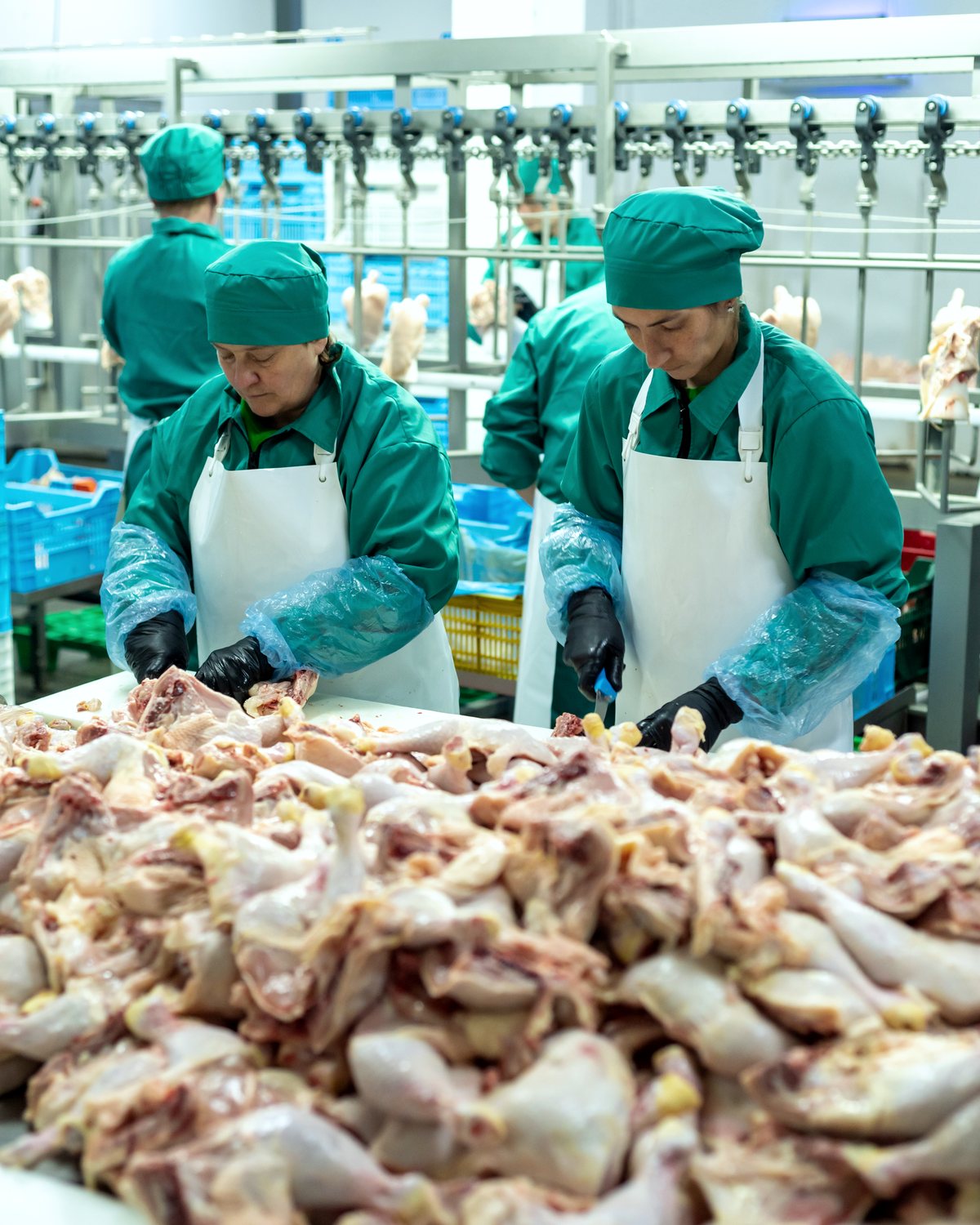
- Agriculture and foodA poultry complex: thirty specialists from two countries, three visa refusals and addresses that could not be used for residence permits
- Agriculture and foodA dairy farm: twelve operators from Kyrgyzstan, a village forty-five kilometres from the migration office and bank, and a trip plan in which one journey covers three tasks
- Agriculture and foodA sugar plant: thirty seasonal workers from Uzbekistan the plant wanted back, eight months between campaigns, and new permits filed neither too early nor too late

- HoReCa and cleaningA cleaning company: twenty-four cleaners from Bangladesh for forty client sites, two job titles instead of one, the side-job question before departure, and a landlord who refused registration

- ManufacturingA plastics plant: a finance director once burned by an 'all-in package', fourteen operators from Kyrgyzstan, and a calculation where every payment is tied to a step of the route
- Agriculture and foodA greenhouse complex: twenty pickers from Tajikistan, most crossing a border for the first time, passports that didn't exist yet, and a document folder that raised no questions at the border



Manufacturing
Planning a women's group of workers?
We'll recruit the group with a female recruiter, check women-only housing and answer families' questions before departure.